01 · Share the information
Let's evaluate the drawing, material, and machine information together.

CUTTING DIE MANUFACTURING PLANT
From packaging to industrial parts, we manufacture cutting dies tailored to your needs.
Share your material, dimensions, and machine model. Let's finalize the technical details of your cutting die together.
If you do not have a drawing, we can start with a product photo, dimensions or sample information.
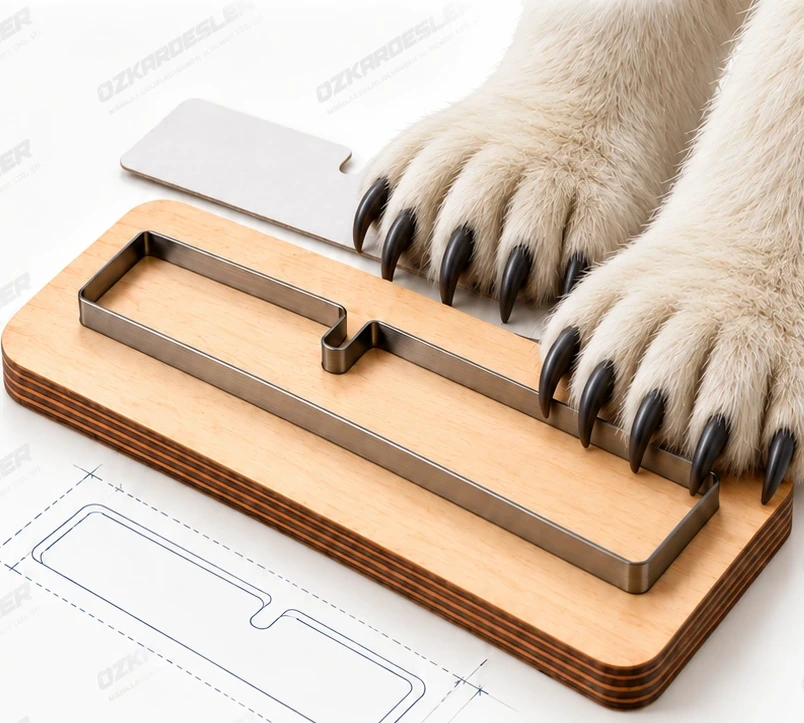
Let's evaluate the drawing, material, and machine information together.
Let's handle cutting, creasing, and waste stripping requirements based on your project.
Let's determine the production scope and delivery expectations together.
37 Cutting Die Type
Custom-builtmaterial and machine evaluation
Nationwide in TurkeyQuote and order communication
CUTTING DIES WE MANUFACTURE
From boxes to laminated packaging, cutting dies suitable for your material.
We manufacture cutting dies for t-shirt bags with or without pins, with punch handles, and tear-off t-shirt bags. We clarify bag dimensions, handle shape, and cutting details based on samples or technical drawings.
Stickers, magnets, and label cutting dies with different cutting-rule heights.
Part geometry, material, and cutting system are evaluated together.
Share your material, part dimensions, and cutting machine.
From shaped cutting of food to high-frequency welding and cutting, dies tailored to the application.
We provide contract laser cutting, waterjet cutting, and plotter mockup cutting according to your production needs, and offer drawing services on polyester and paperboard.
Dies evaluated according to your BOBST machine model or rotary system.
Creasing matrix (pertinax) and steel creasing matrix options used in die and packaging manufacturing. Let us determine the type suitable for your needs together.
We manufacture dies that cut beech, poplar, birch, pine, spruce, fir, larch, cypress, cedar, and redwood boards in a thickness range of 1–4 mm. These wood cutting dies are mostly used in swatch card applications.
For label cutting dies, 8 mm and 12 mm refer to the cutting-rule height. Machine compatibility and technical scope are evaluated based on your project details.
Just share a photo of your material and the cut you want to make.
SOLUTIONS SUITABLE FOR YOUR PRODUCTION
We address the details that affect the result of the cutting die together, from the paperboard structure to the folding style.
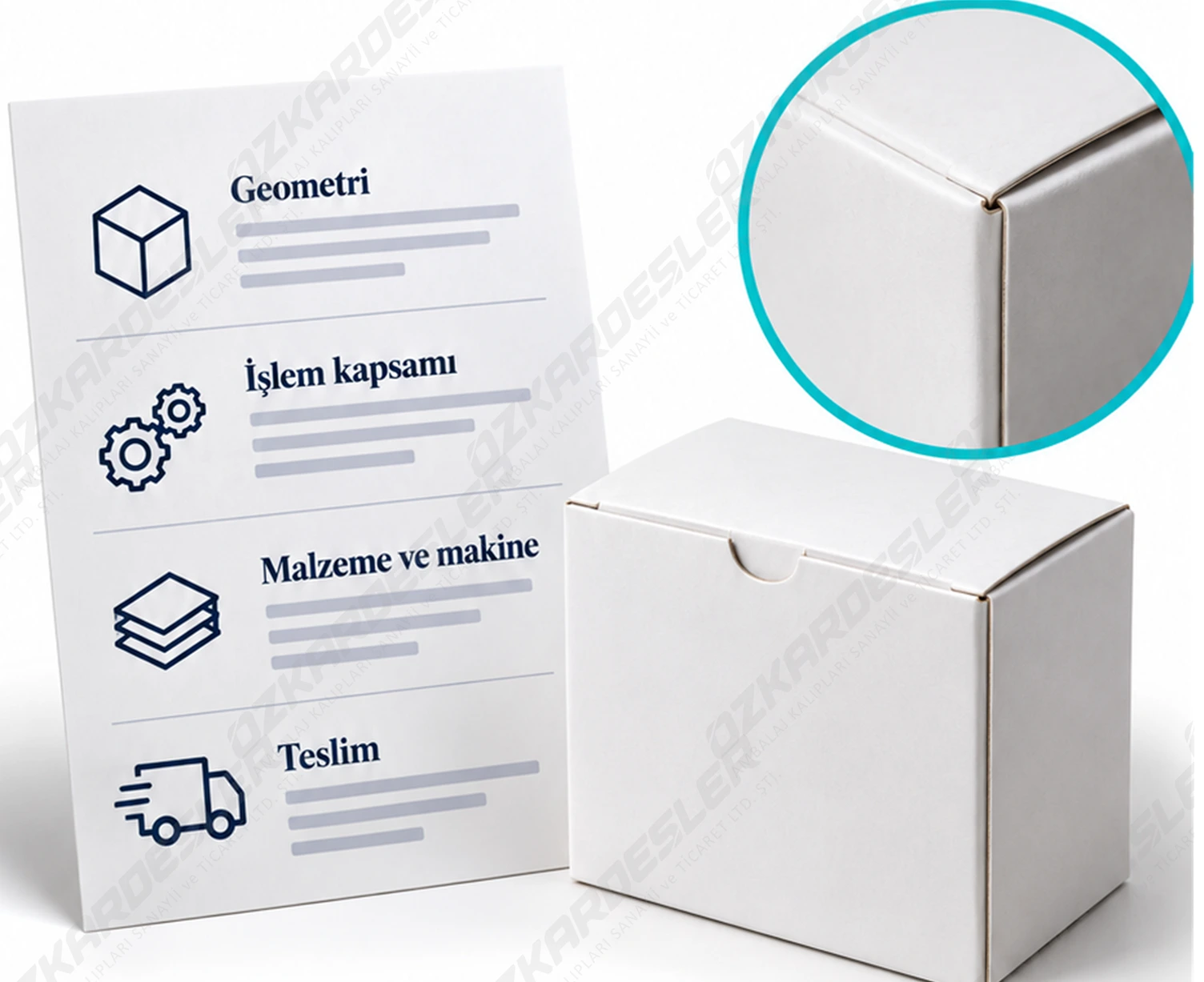
Cutting and creasing layouts suitable for the material, grain direction, and counterplate system for folding cartons.
Share your project ↗02 / CORRUGATED BOARD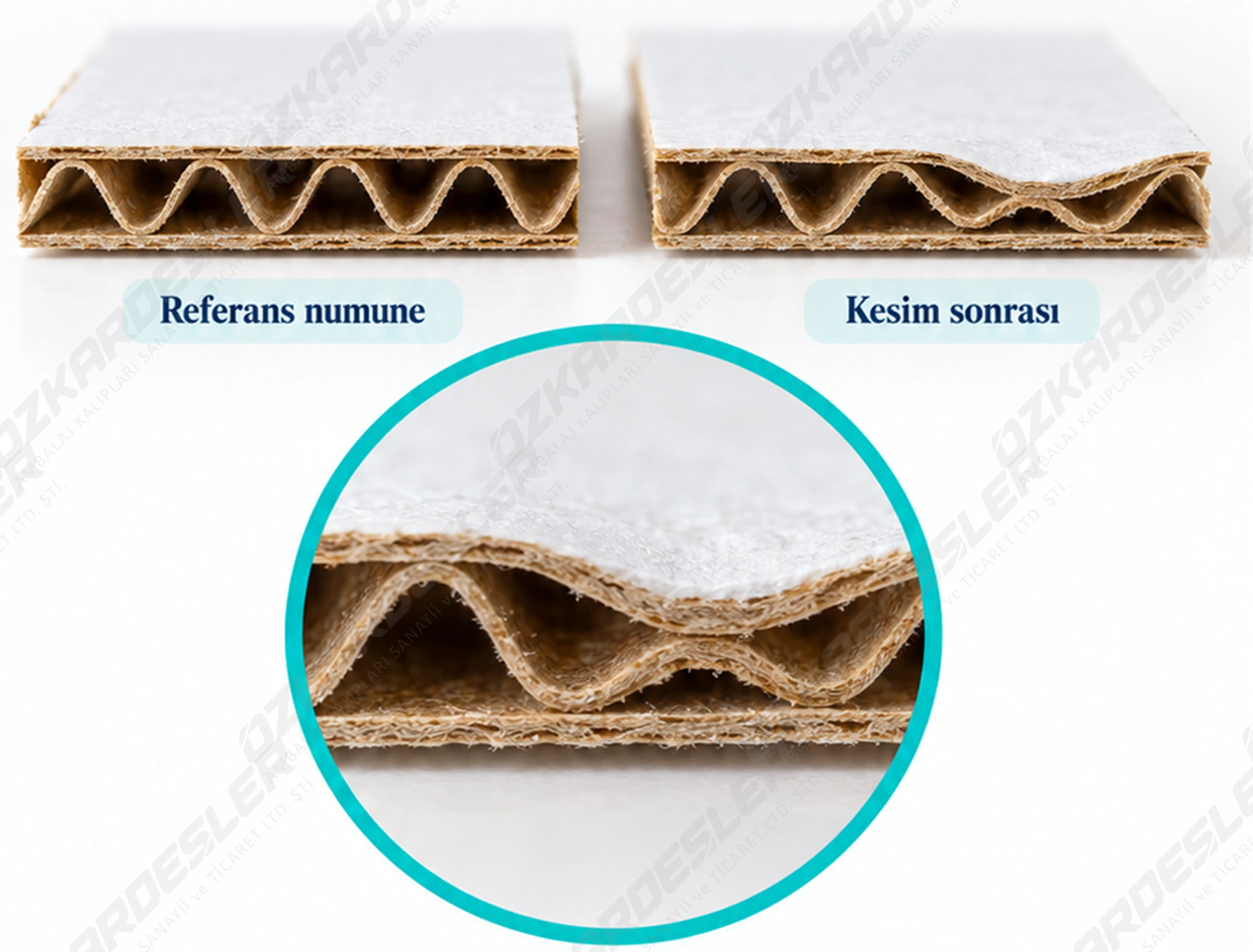
Cutting rule, creasing, and ejection rubber layout evaluated according to flute type, sheet structure, and waste areas.
Share your project ↗03 / EASY-OPEN PACKAGING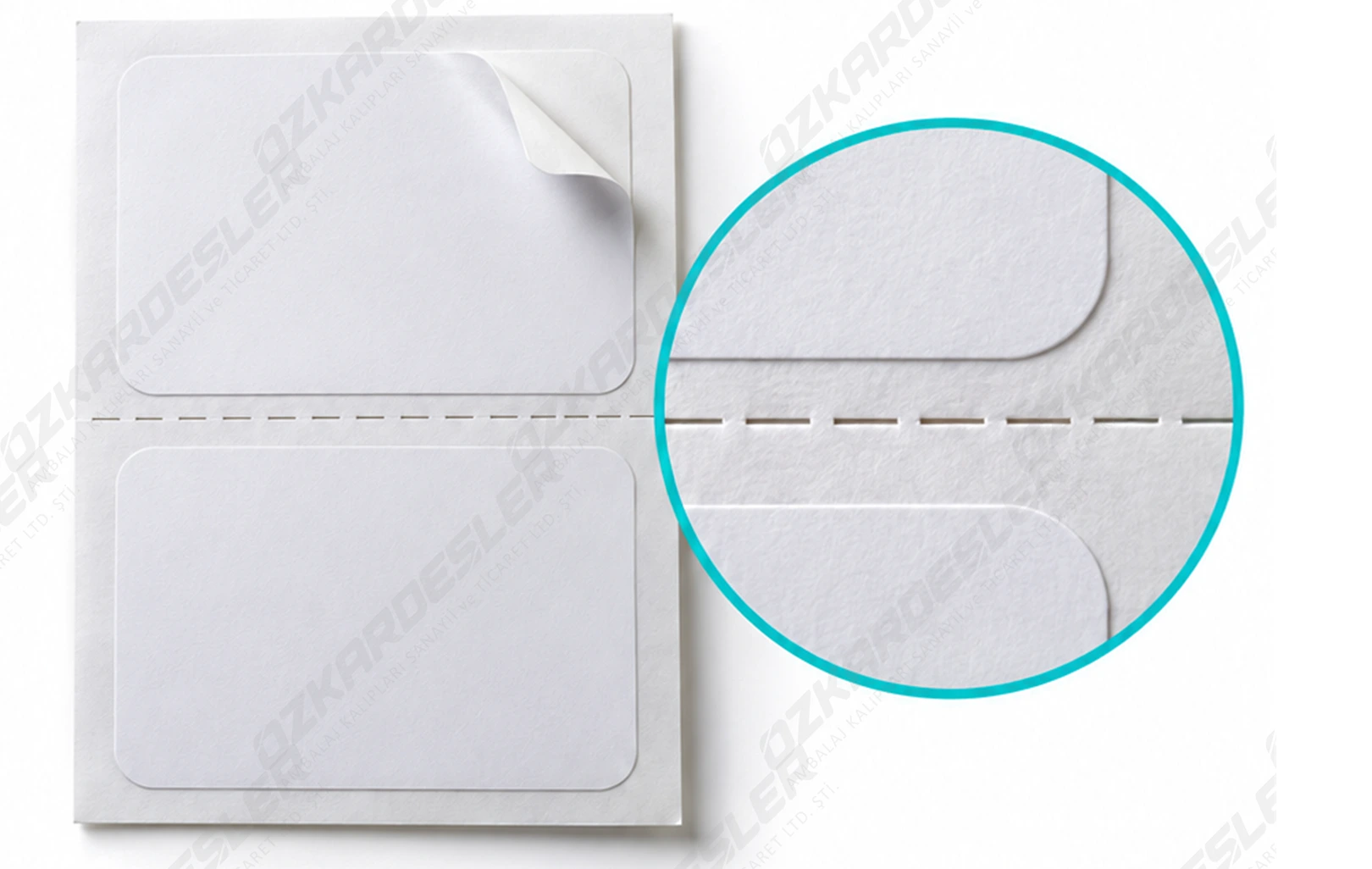
Designs intended to maintain integrity during transport and open as desired during use.
Share your project ↗04 / STRUCTURAL DESIGN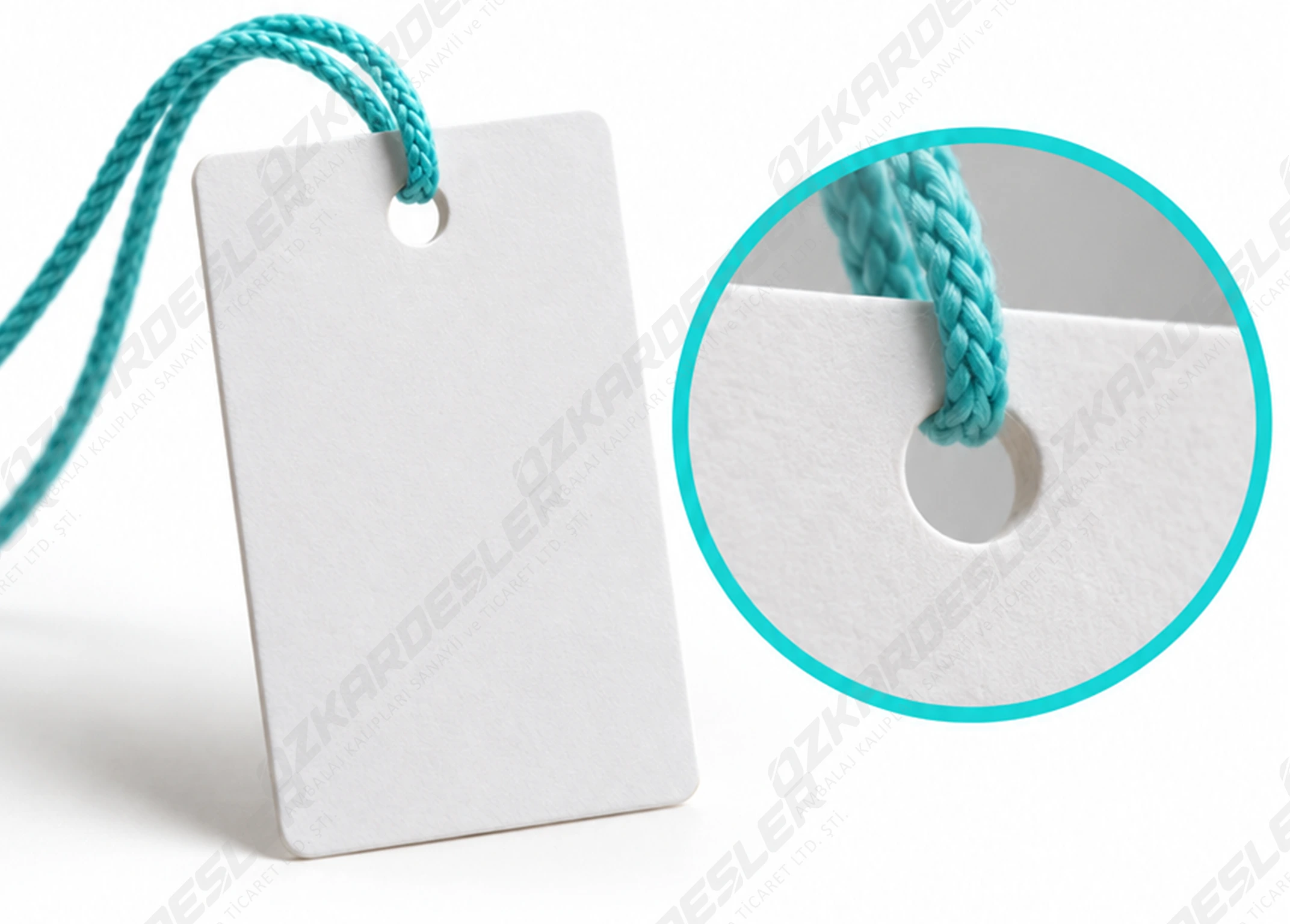
Design starting from product dimensions or existing drawings, considering folding, assembly, and use together.
Share your project ↗CUTTING DIE SELECTION
A cutting die is the tool that forms the cutting lines and, if necessary, folding or controlled tearing areas of the packaging. Cutting rule, creasing, carrier, and ejection setup are evaluated together according to the requirements of the job. Simply knowing the width and length of the box is not enough to define the correct cutting die scope.
In flatbed cutting, the sheet and cutting die work under pressure; in rotary cutting, the tooling is adapted to a rotating cylinder setup. BOBST is a machine brand: when requesting a cutting die, model and existing tooling information should be shared instead of just the brand name.
The actual thickness of the paperboard, grain or flute direction, printing and coating structure are important in determining cutting and folding requirements. Do not assume the same grammage means the same material behavior.
Machine model, usable die area, tooling clamping, and counter-cutting system are examined together. Describe flatbed and rotary tooling requests separately.
Share the approved dieline, sheet layout, production quantity, and waste stripping/blanking expectations if any. Do not limit the quote scope to the outer cutting contour only.
THE ÖZKARDEŞLER PRODUCTION APPROACH
Folding, assembling, and using the cut sheet are parts of the same design.
CAD/CAM team
PURCHASE the EngView Package & Display Designer Ultimate Program!
We evaluate thickness, grain and flute direction, printing, coating, and folding requirements.
We address compatibility with the machine model, die size, cutting-rule height, and counter-cutting surface.
We consider rubber placement, waste evacuation, and waste stripping setup if applicable, along with cutting lines.
HOW DO WE PROCEED TOGETHER?
Send us the drawing, material, and machine information.
Let us determine the scope, technical specifications, and sample requirements if necessary.
Let us share the price and delivery plan based on the clarified scope.
Let us prepare and check your cutting die according to the approved drawing and specifications.
FOR YOUR EXISTING CUTTING DIE
Incomplete cutting, creasing cracking, broken bridges, or waste remaining in the die… Share a photo of the problematic area, your material, and machine model.
TECHNICAL GUIDE
The topics we discuss most frequently before quoting and production.
No. If you have a drawing, you can share it. If not, we can start with product dimensions, a packaging photo, or sample information. We will complete the technical details necessary for a definitive quote together.
Material changes can affect cutting, creasing, and perforation results. It should not be assumed that it will yield the same result without evaluating the thickness and structure of the new material.
Cutting die size, cutting-rule height, connection setup, and counter-cutting surface can vary depending on the machine. This information helps us prepare the correct cutting die.
They are determined based on dimensions, design complexity, cutting rule and creasing specifications, rubber layout, additional tooling needs, and order scope. They are shared in our quote following technical review.
The geometric holding ratio is the ratio of the uncut length left along the line. By itself, it does not show the actual tearing force or the transport strength of the box. Material, flute direction, and usage method must be evaluated together.
PRODUCTION NOTES FROM INSTAGRAM
Explore the six most recent posts published on our Instagram account.
Cover images from our latest six posts. Open each complete post on Instagram.
Explore the full collection ↗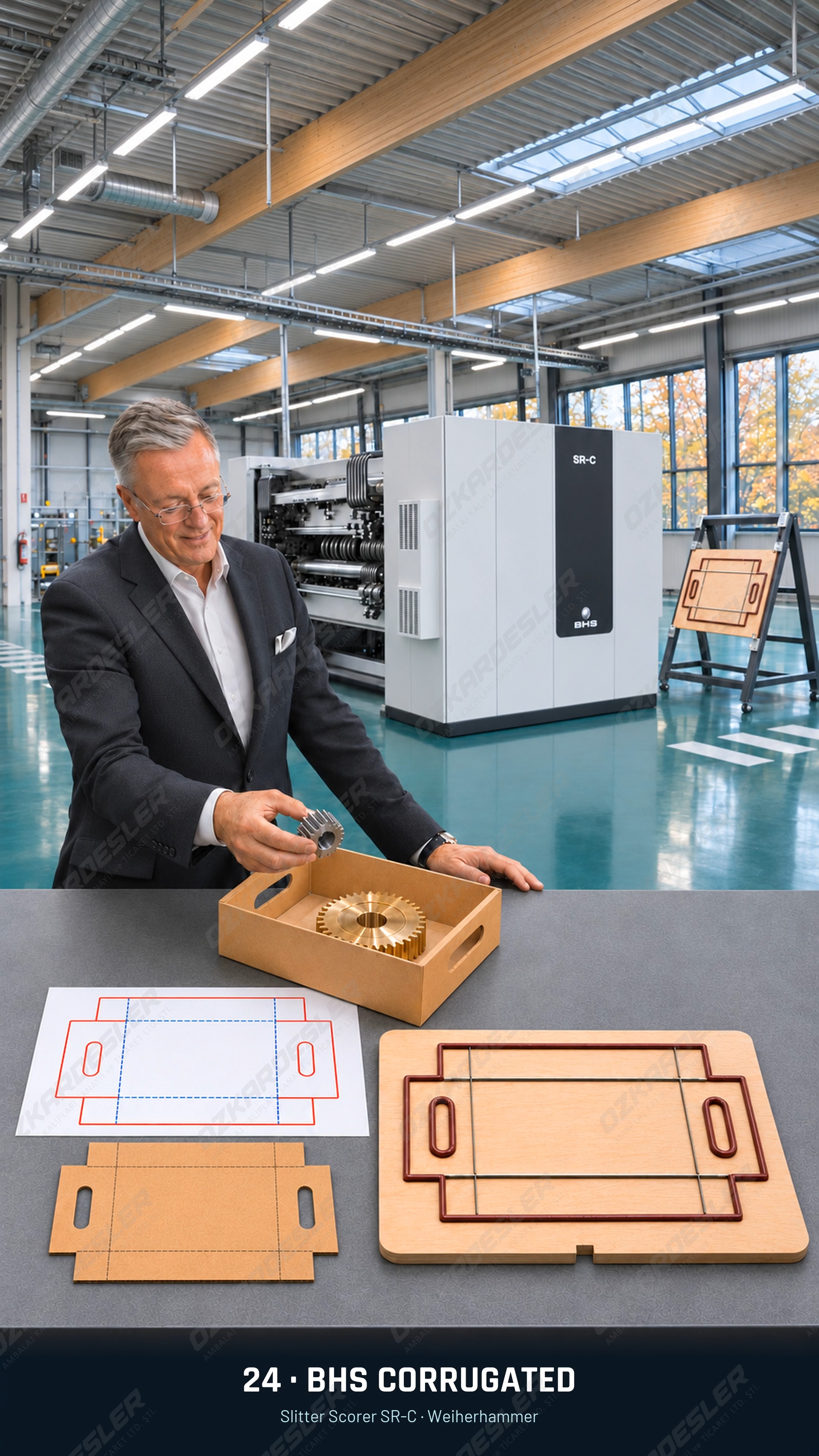 Instagram ↗
Instagram post
A BHS post from the packaging cutting machine manufacturers series.
 Instagram ↗
Instagram post
A post about our careers page and open positions.
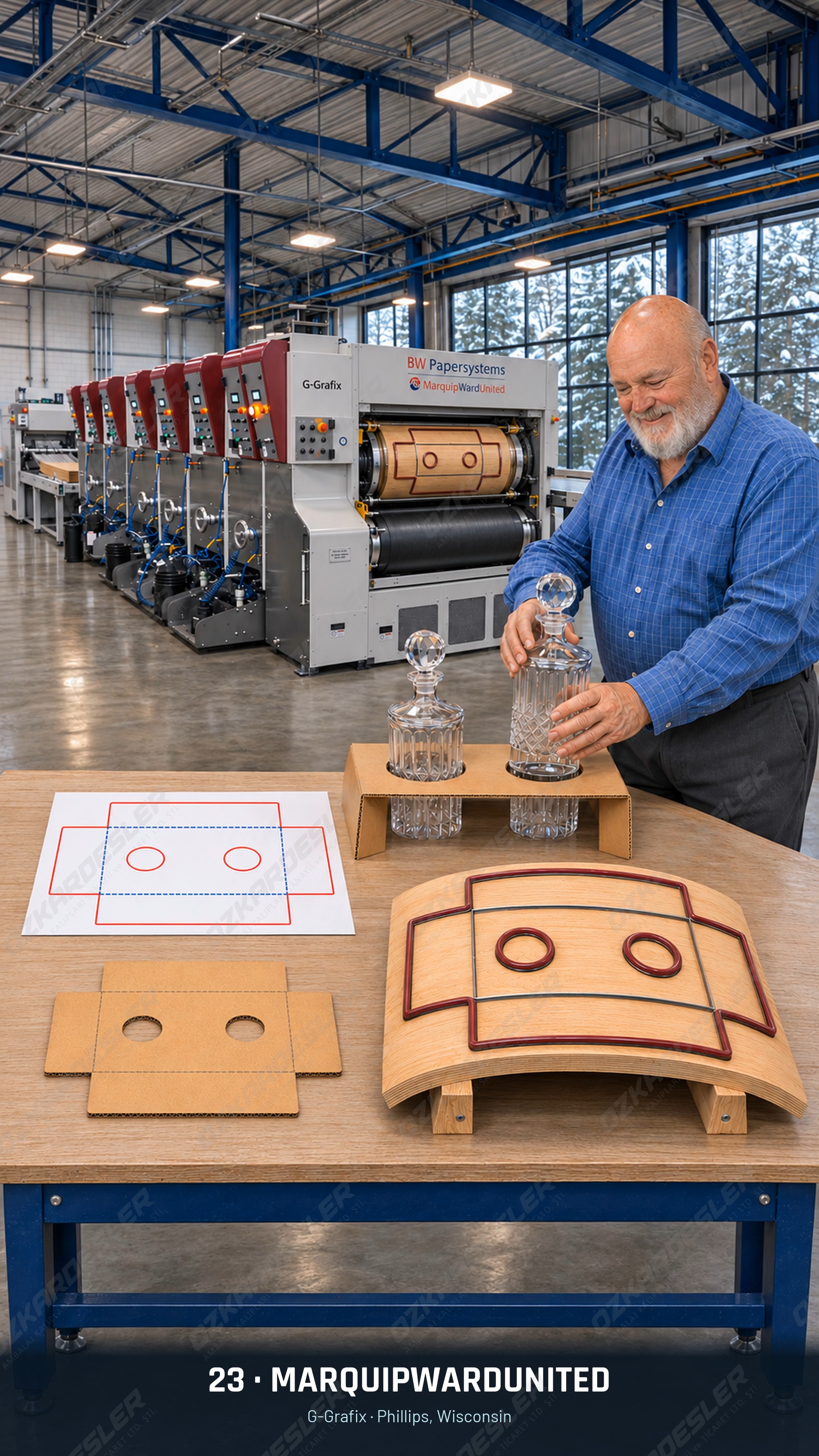 Instagram ↗
Instagram post
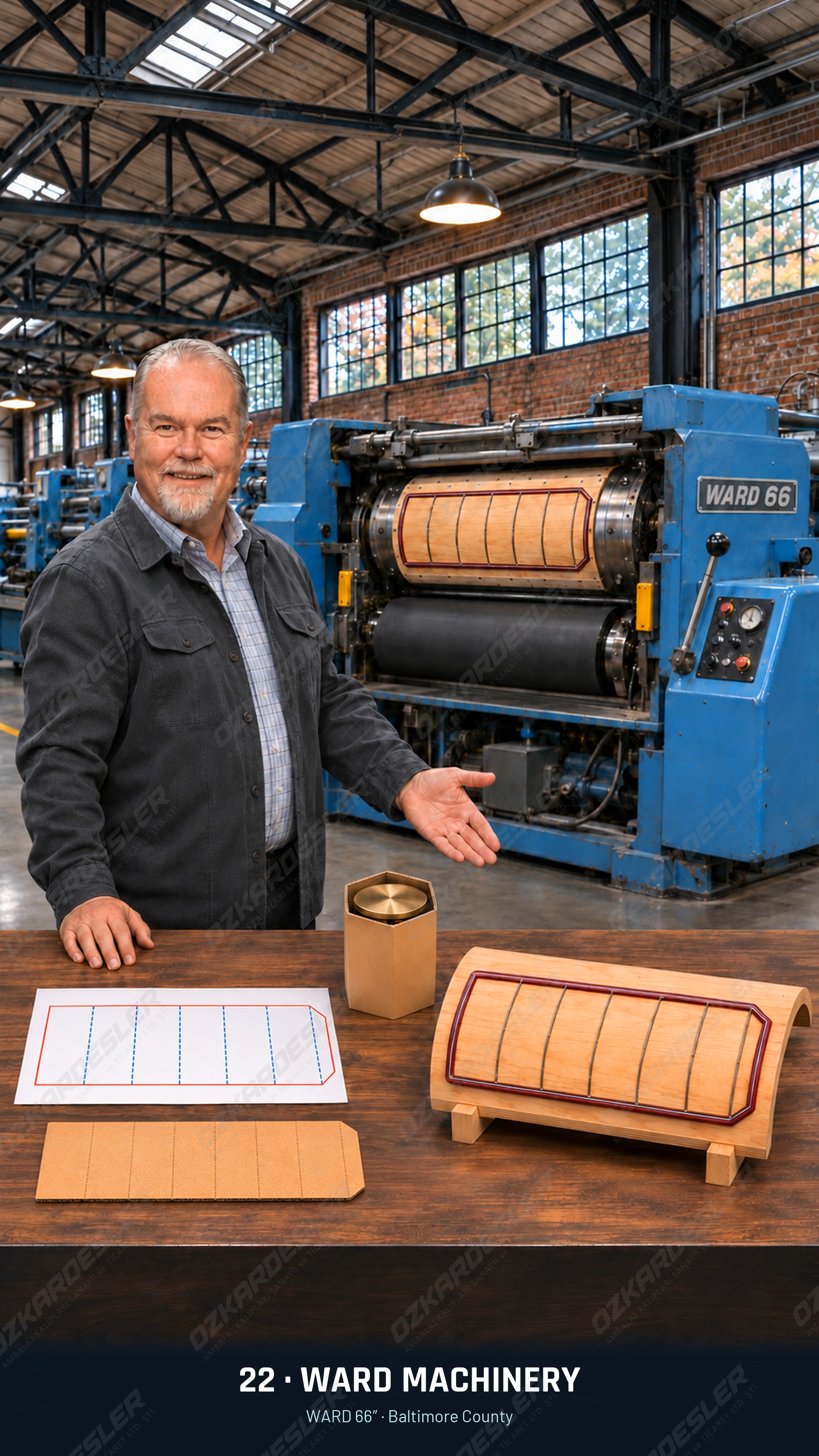
MARQUIP from our packaging cutting machine manufacturers series.
 Instagram ↗
Instagram post
“With respect and gratitude.”
 Instagram ↗
 Instagram ↗
Instagram post
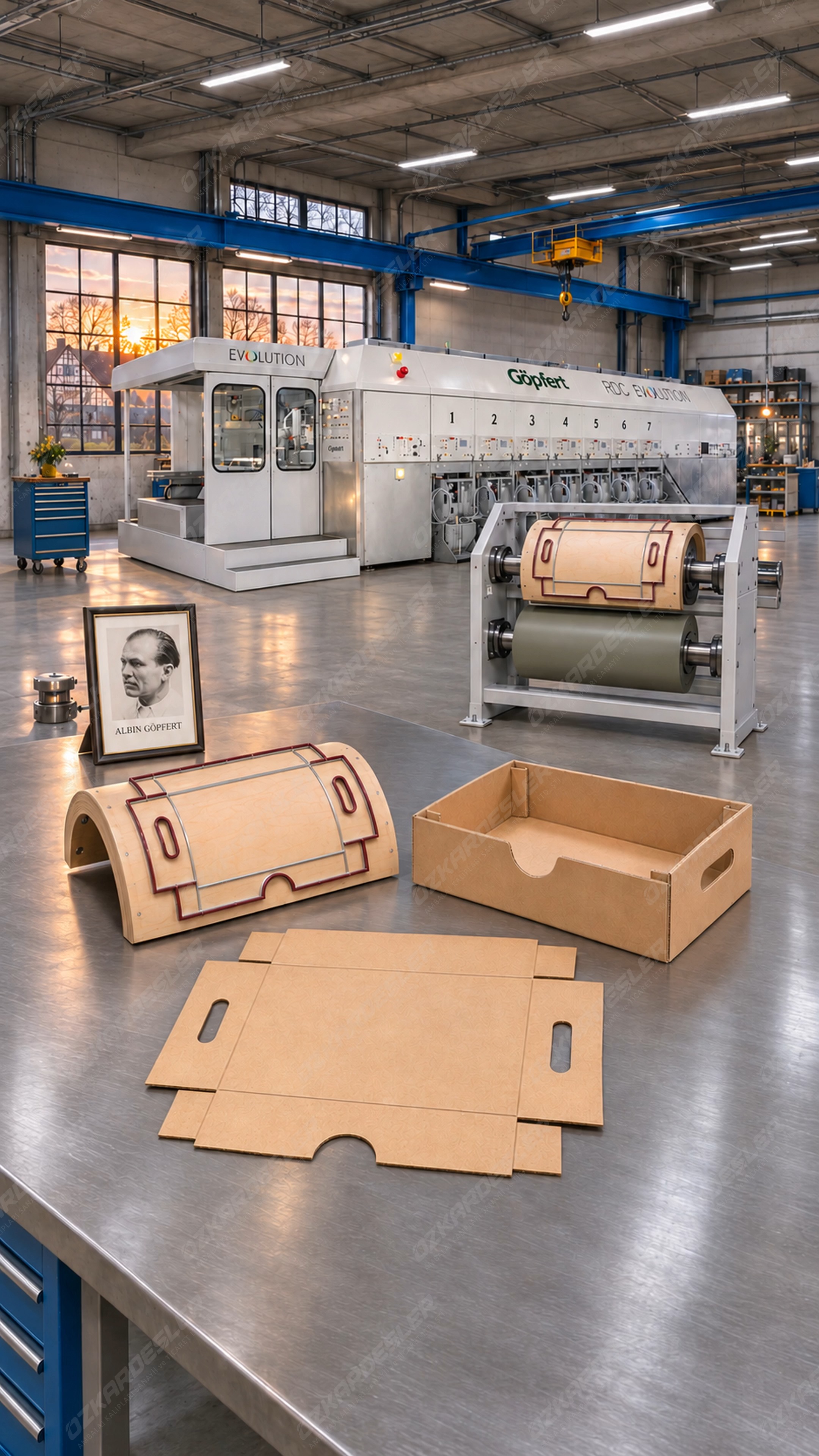
GÖPFERT from our packaging cutting machine manufacturers series.
LET'S TALK ABOUT YOUR PROJECT
Sharing the technical information you know is enough. We will complete the missing details together.
Even if you don't have a drawing yet, we are here.
You can start with dimensions or a photo.